SPECTROSCOPY
PROTOTYPES I-III
THREE OPTICAL INSTRUMENTS
KONCERTKIRKEN, CøPENHAGEN, DK
2025
DESIGN, CONSTRUCTION & SOFTWARE DEVELOPEMENT | Severin Dornier
CURATION & PERFORMANCE | NEKO3
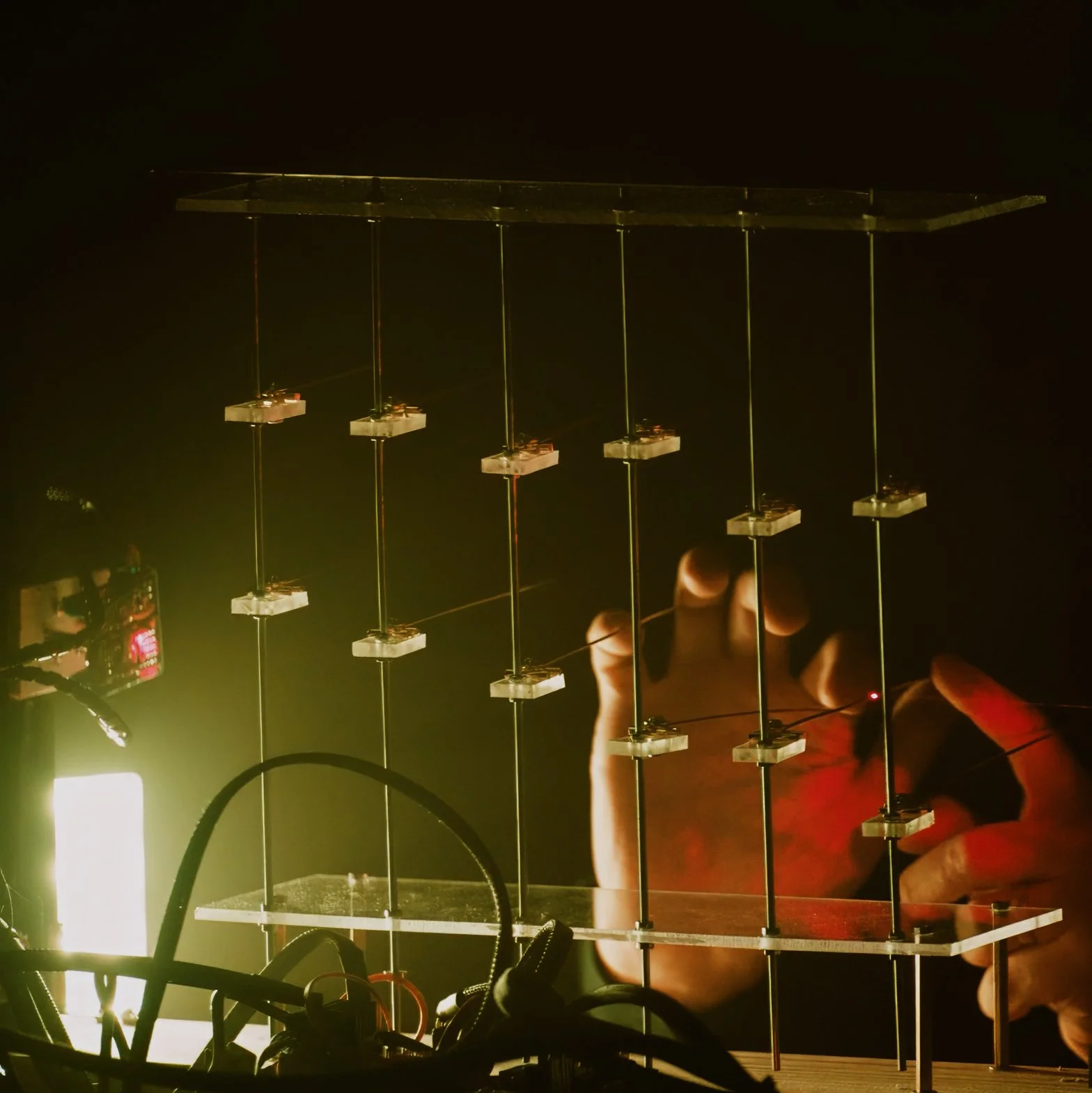
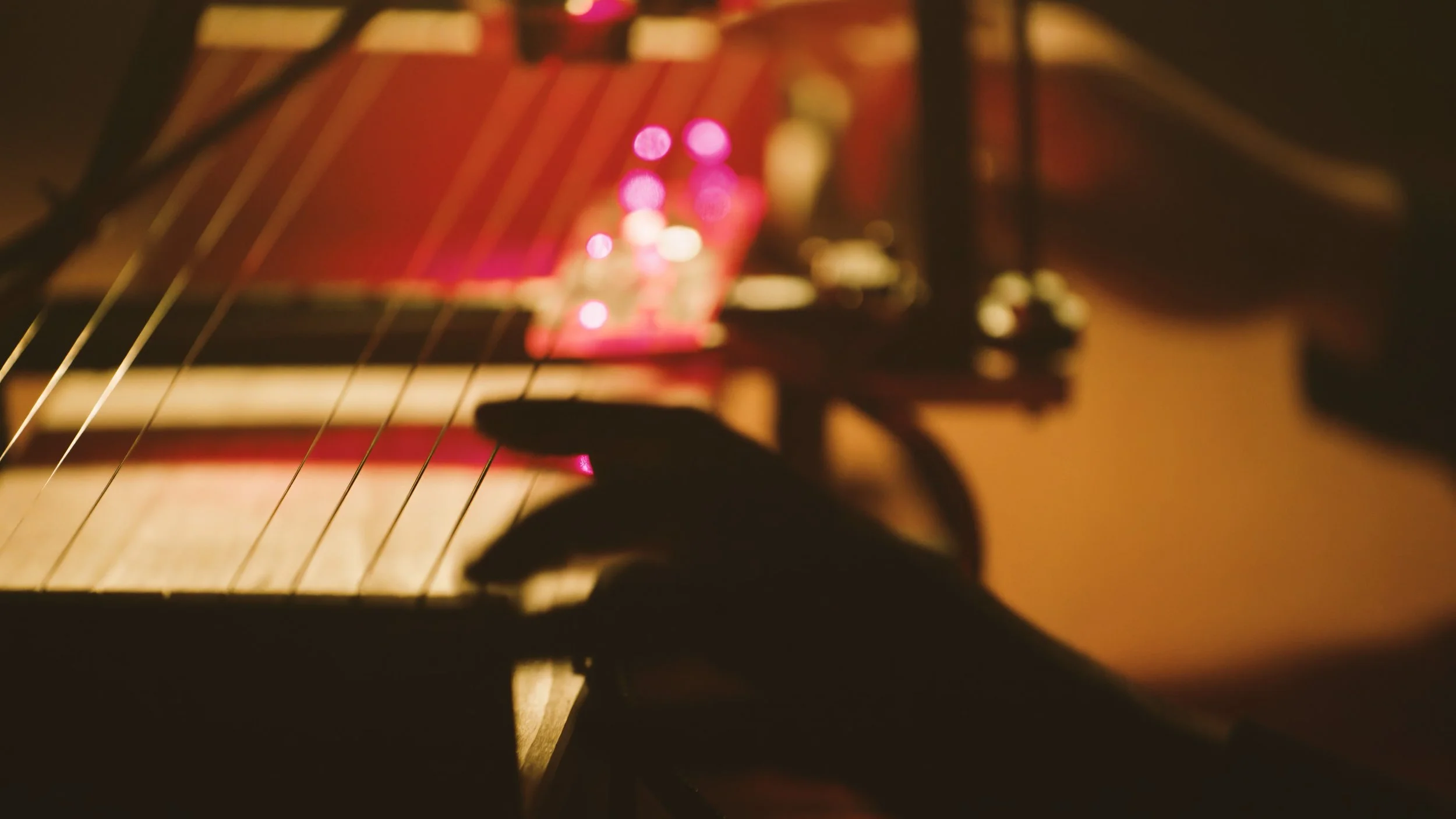
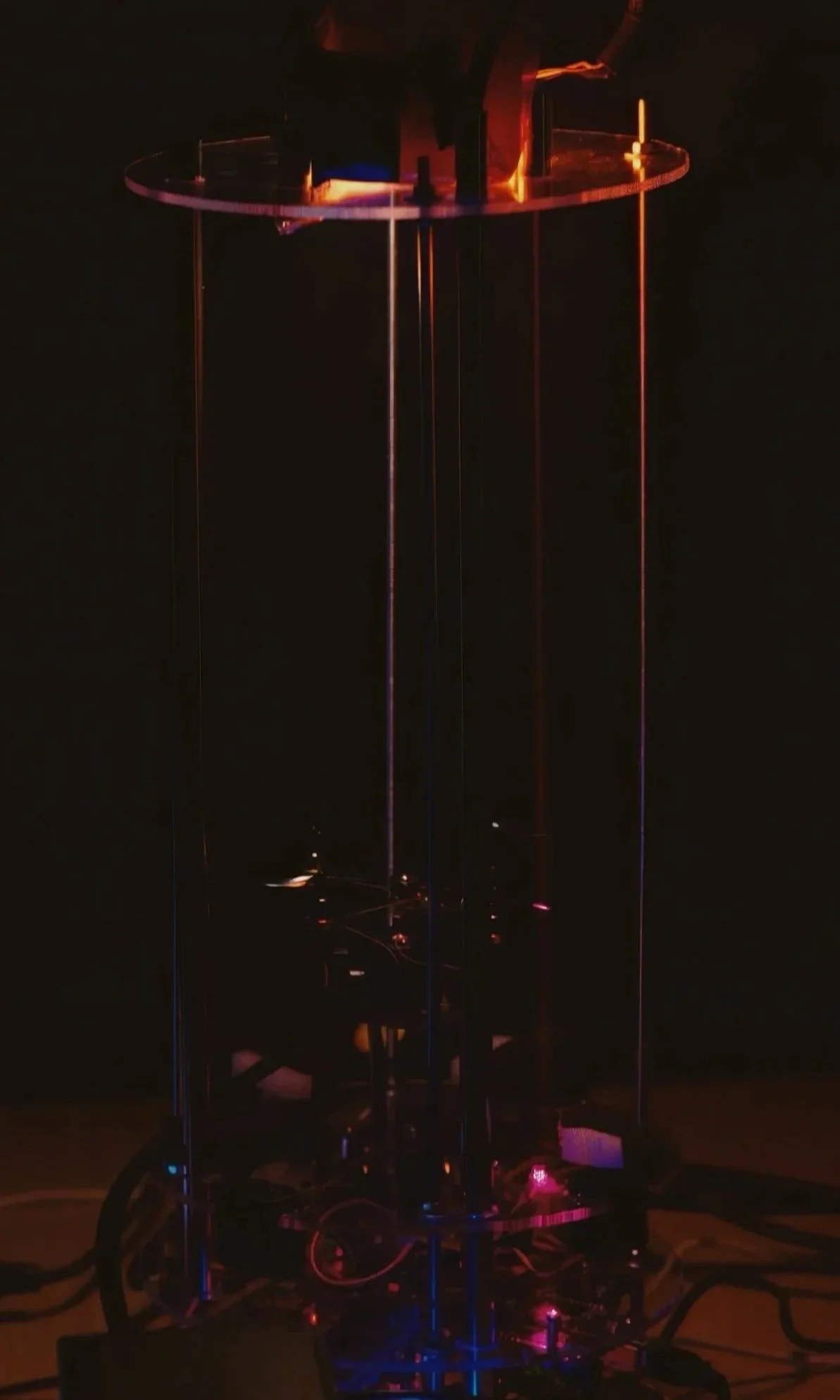
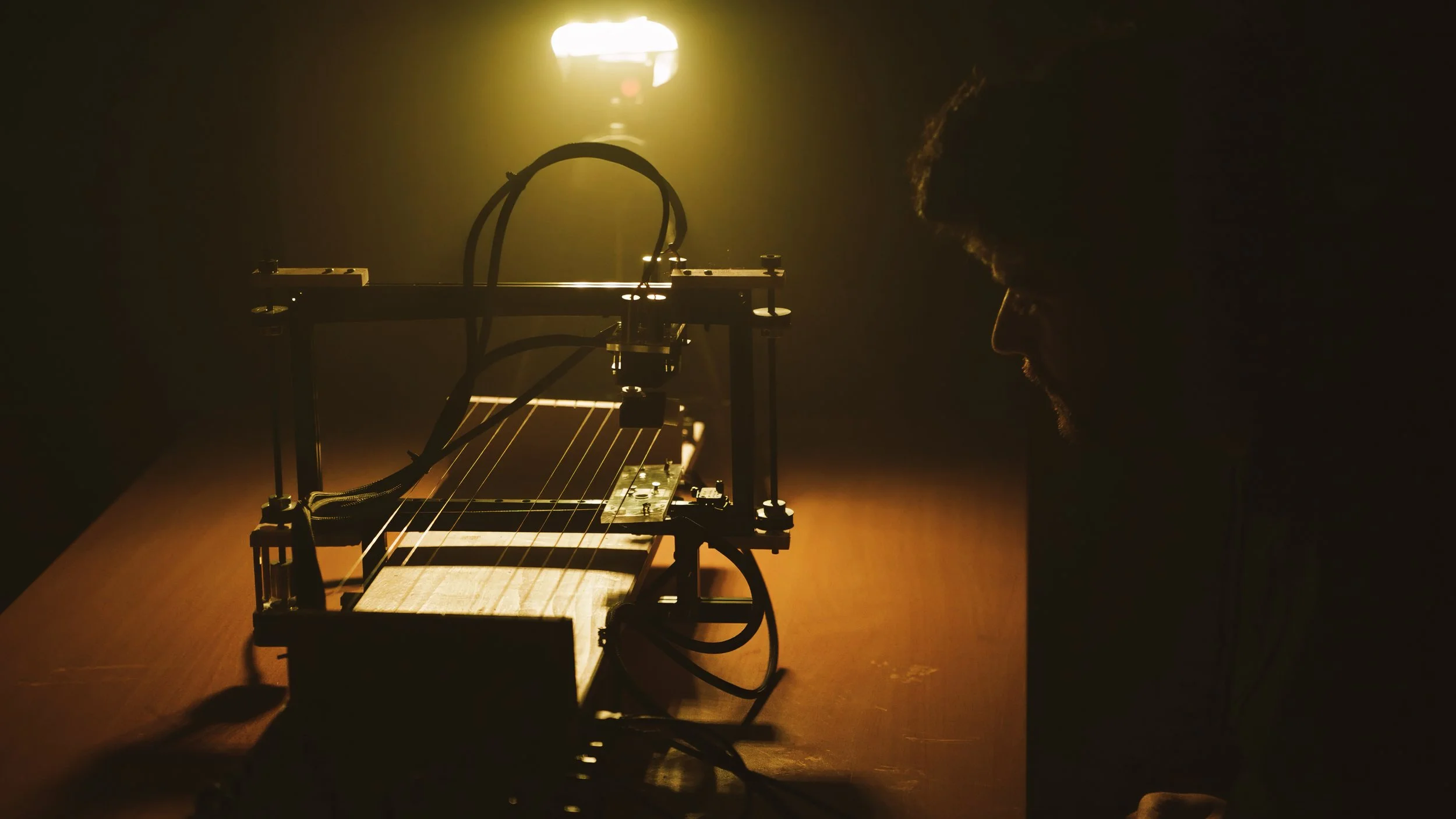
Spectroscopy is an ongoing research project exploring the interactions between sound and laser beams. The series presented here comprises three instruments that transform physical oscillations into acoustic signals using lasers and photoelectric pickups. The performers can play the prototypes through physical touch while simultaneously controlling motorised laser beams that scan across metal strings, metal tines, or spinning rotor blades. These lasers capture the oscillations and convert light information directly into sound through a custom designed amplification circuit. By mapping laser position, envelope, scanning speed, and rotor tunings to standard MIDI controllers, the performers can precisely shape the sound, allowing each instrument to function as a standalone optical synthesizer.
PROTOTYPE I
Laser Organ
This instrument transforms different oscillation speeds of small drone rotors into sound. The keyboard can be played polyphonically, setting different speeds for the four independently controllable motors simultaneously, with each rotor acting as a separate voice.
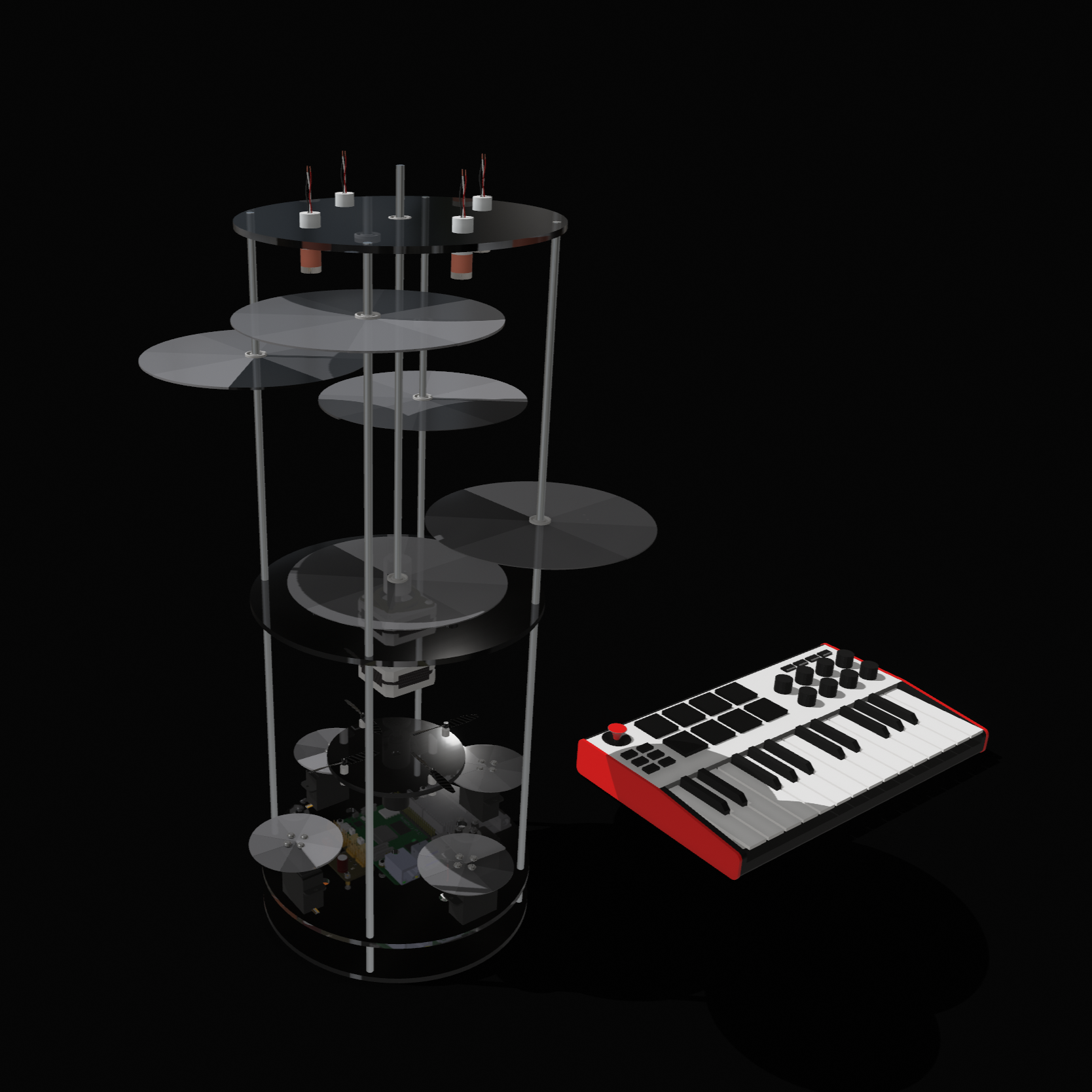
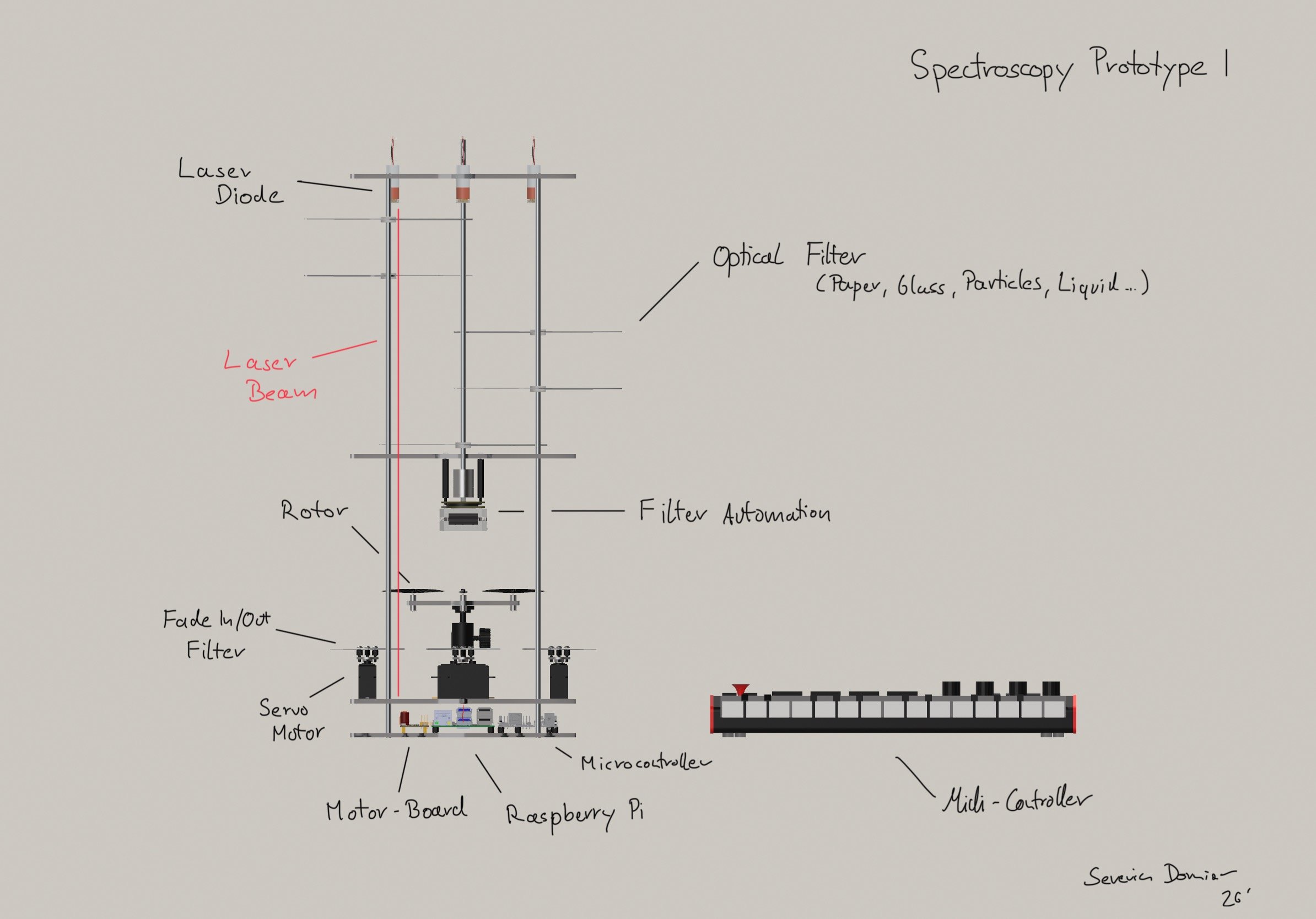
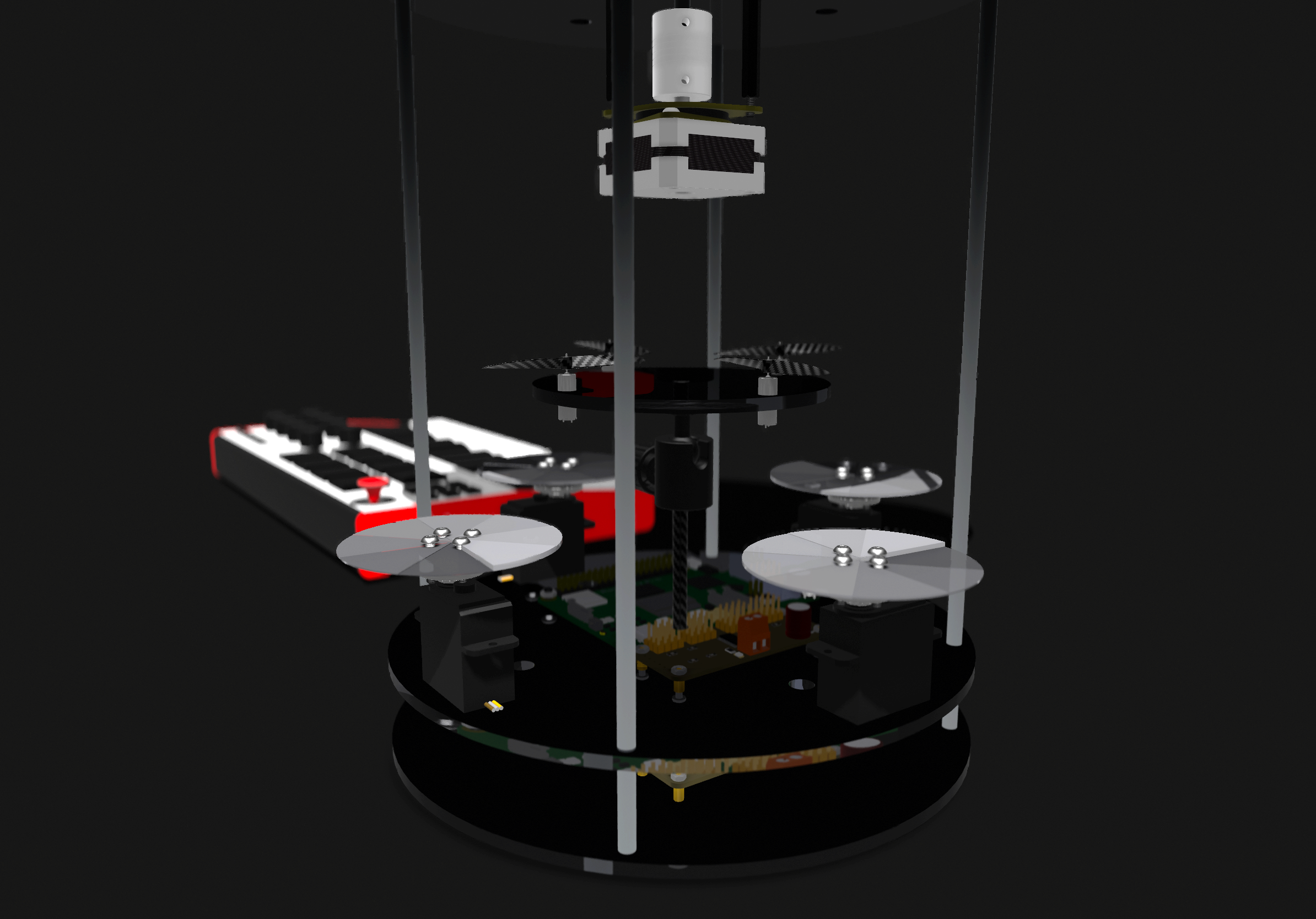
Each voice has a corresponding laser beam that picks up its speed - not unlike a CD player. By physically modulating the beam with materials such as paper, glass, liquid, or other moving particles, different timbres and textures can be achieved, similar to amplitude and frequency modulation in analog or digital synthesis.
PROTOTYPE II
Laser Harp
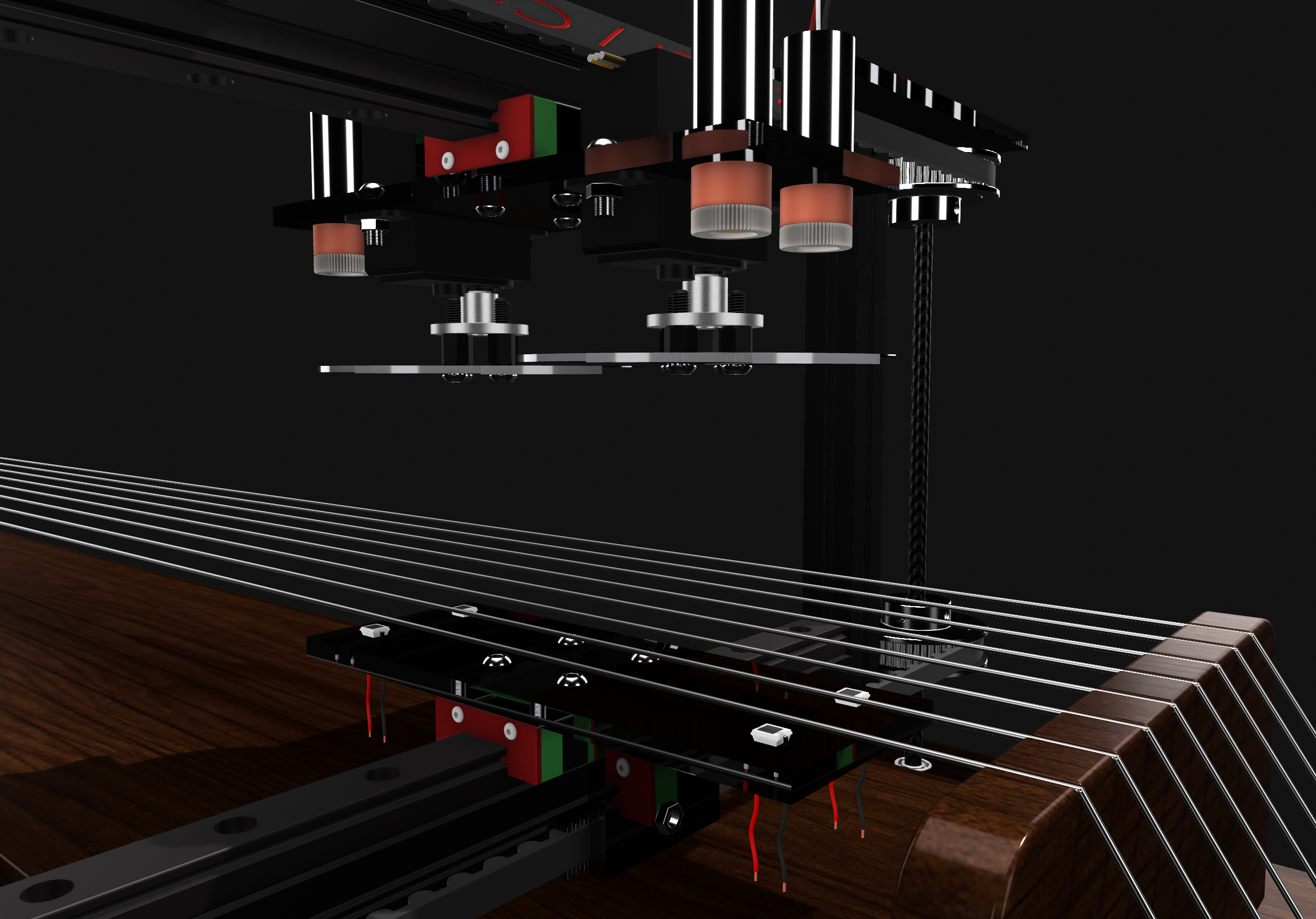
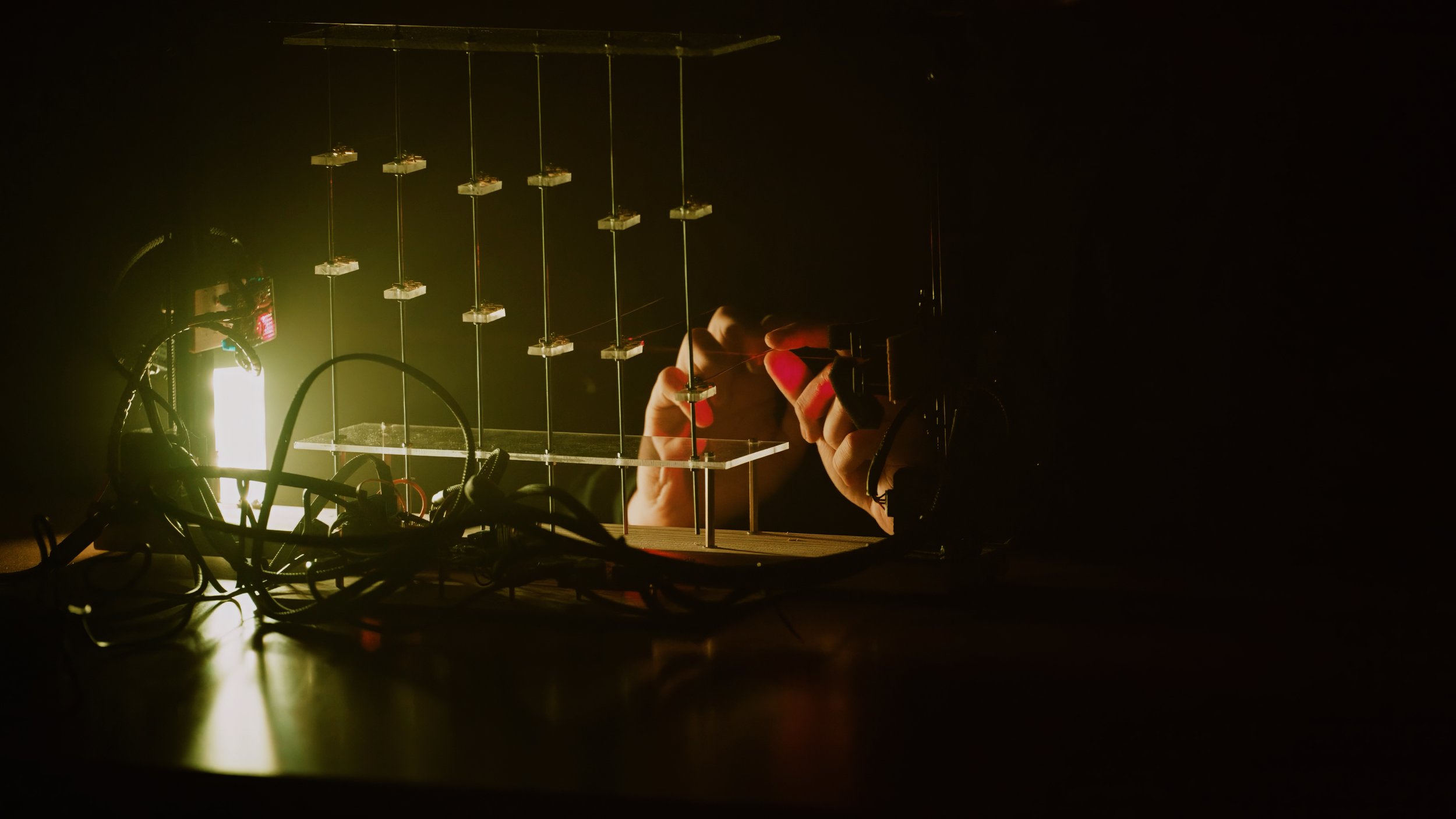
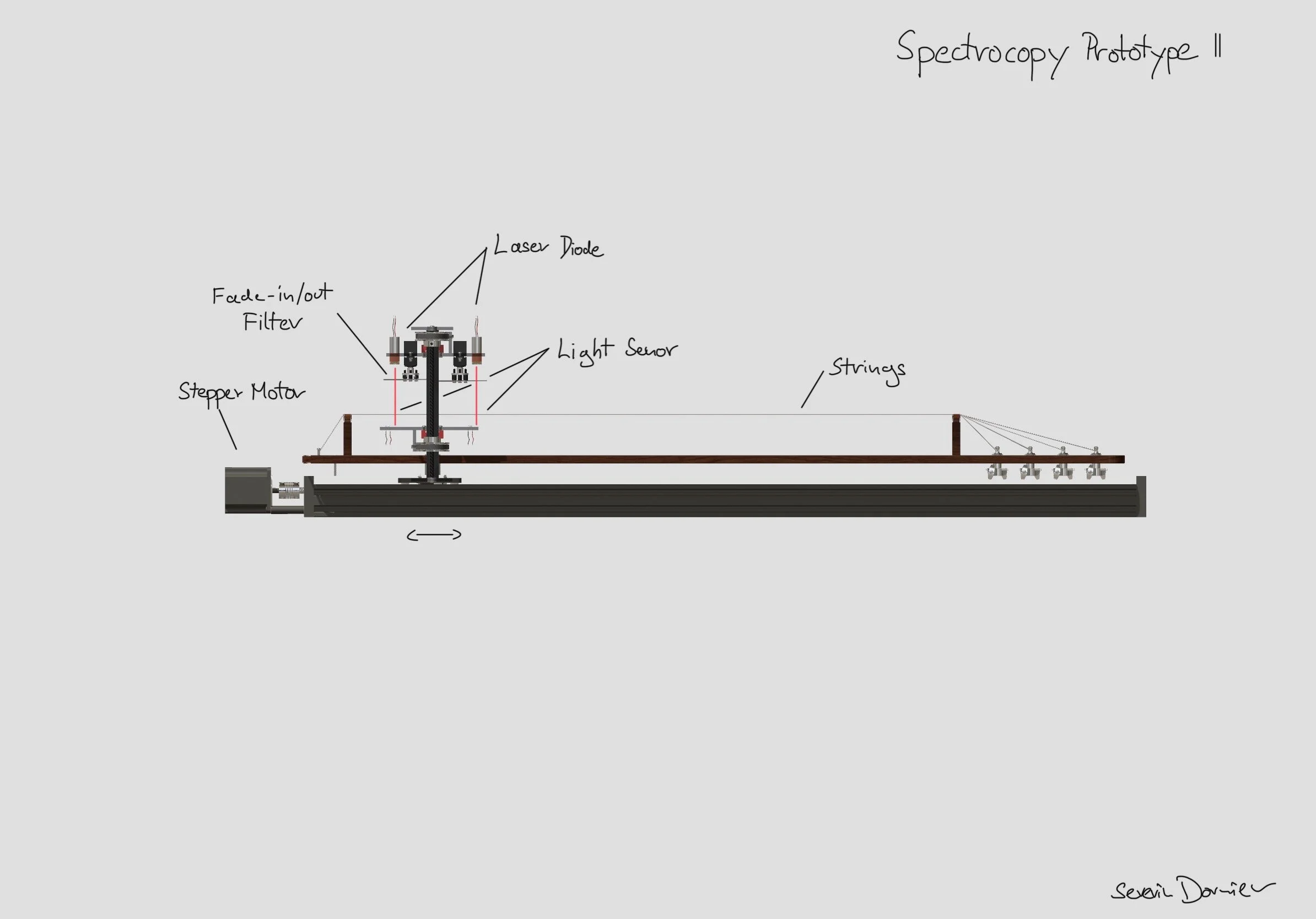
This prototype is a plucked string instrument with eight metal strings, playable through various techniques including the fingers, plectra, and small mallets. Four optical automated pickups can scan two strings simultaneously at different positions, producing a variety of harmonic shapes and combinations. The pickup positions are controlled via an expressive MIDI foot pedal while playing the instrument dynamically.
PROTOTYPE III
Laser Kalimba
This instrument follows a similar principle but uses vibrating copper tines, resulting in a different playing technique and waveform character. The shorter decay and increased harmonic complexity of the tines give the instrument a more distorted sound profile compared to the harp.
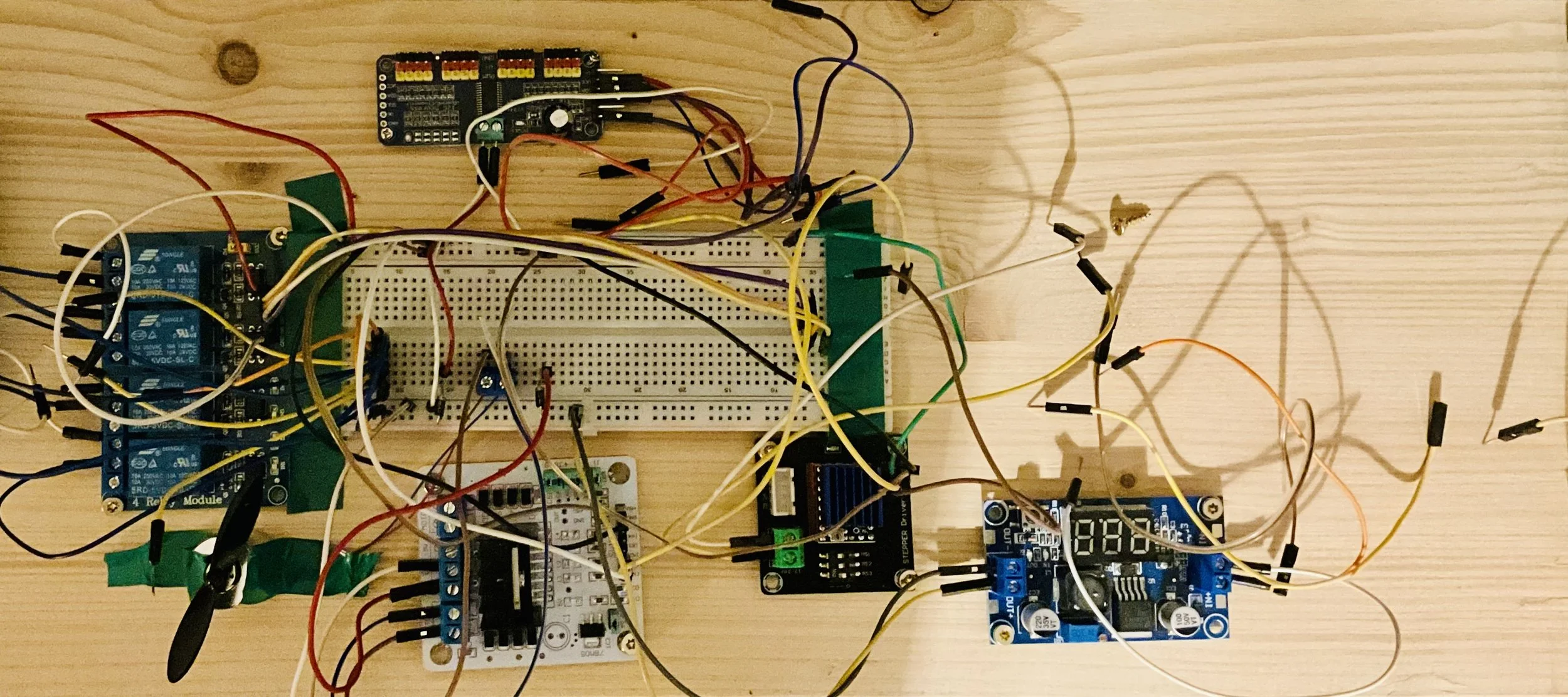
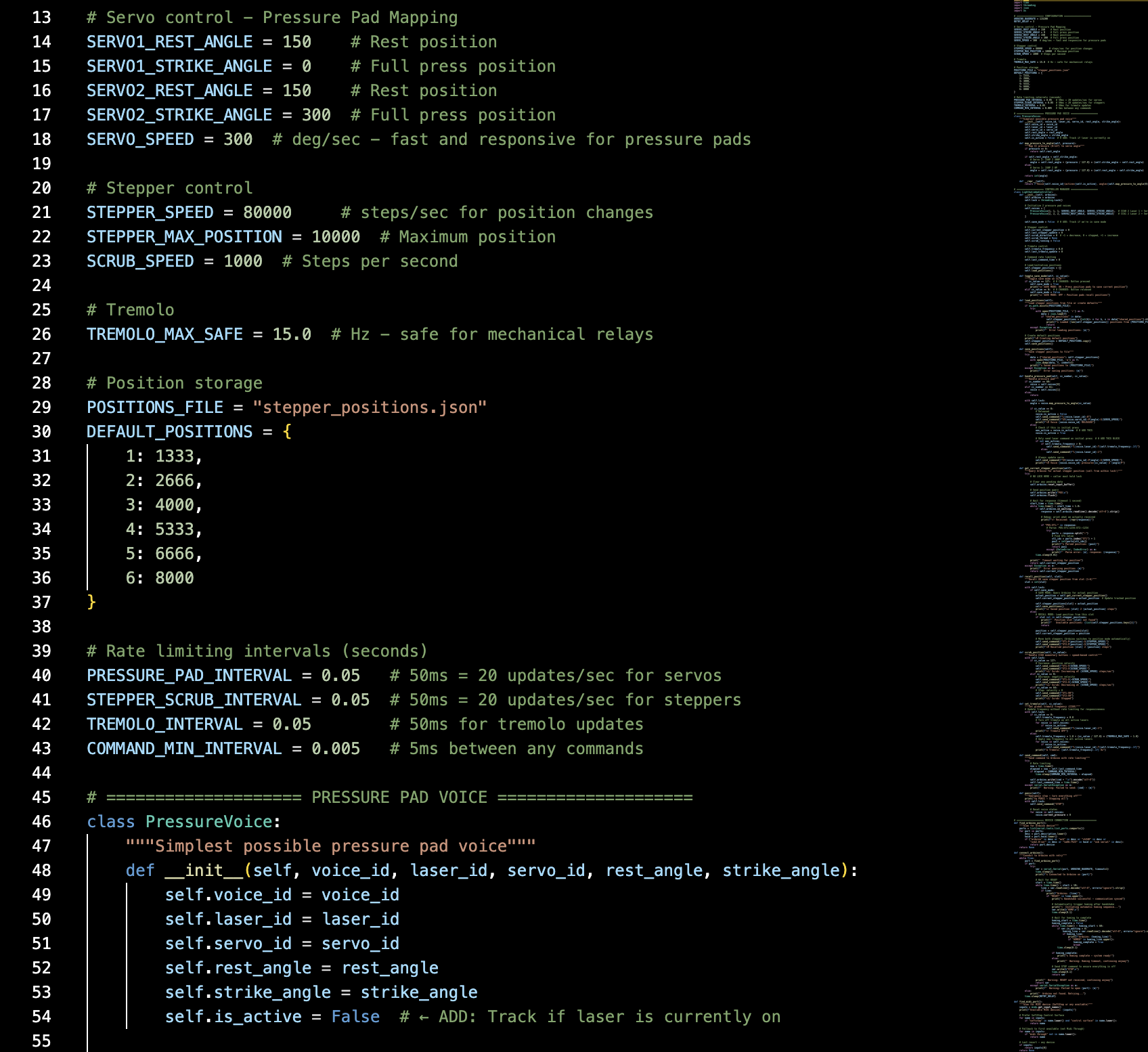
The project included the development of a fully standalone application based on the Raspberry Pi platform to implement MIDI control. Each prototype is built with a focus on technical resilience and ease of use for the performer, including comprehensive documentation, and can be operated with a variety of consumer MIDI controllers requiring no external programming or configuration during performance.
Spectroscopy is an ongoing research project into the interactions between light and sound. Future iterations are planned expand the system toward the optical scanning of ancient and historically significant string instruments, further developing the conceptual and musicological dimensions of the project.
The instruments were developed for and commissioned by NEKO3, whose musical input shaped the design greatly and who performed on them during the NEKO3 Micro-Workshop Concert 2025 in Copenhagen.
Project curated by NEKO3 and supported by Art Music Denmark, Augustinus Foundation, Danish Composers’ Association, The Obel Family Foundation, Gramex DMF, KODA, Louis-Hansen Foundation and the William Demant Foundation
Photos & Video ©Niklas Ottander